

All About ACEGID
A new renovation and campus expansion paves the way for scientific innovation
Last October, Build Health International (BHI) attended the opening ceremony for the Institute of Genomics and Global Health at Redeemer’s University in Ede, Nigeria. This institute, which recently changed its name from the African Centre of Excellence for Genomics of Infectious Diseases (previously referred to as ACEGID), represents five different areas of scientific research. The institute’s expertise focuses on intersections of human health and zoonotic disease, as well as data science, virtual reality, and genomic sequencing. More importantly, it has prioritized attracting students, rising scientists, and health researchers from throughout the African continent to collaborate on scientific sequencing projects.
The October ceremony was another milestone in the long-term relationship between BHI and the institute (when it was known as ACEGID), which has been focused on strengthening and expanding research infrastructure to enable the comprehensive study of infectious disease. In 2017, BHI first made contact with ACEGID through Dr. Christian Happi, a professor of molecular biology and genomics at the Department of Biological Sciences at Redeemer’s University.
Leading the Pandemic Response
ACEGID has historically been defined for its rapid response and detection of infectious disease surveillance and documentation. Prior to the COVID-19 pandemic, ACEGID confirmed the first case of Ebola in Nigeria within the first six hours of surveillance and, in response, developed rapid diagnostics tests. Later, in 2020, ACEGID was one of the first institutions in the world to successfully sequence and document the SARS COVID-19 genomic sequences. Both instances allowed the global health community to better understand, detect, monitor, and control disease outbreaks.
Following these critical pandemics throughout Africa, a clear need emerged: rapid and expansive investment in people and space to prevent and respond to global outbreaks of infectious disease. ACEGID’s key infrastructure priorities stemmed from reconfiguring much of its existing lab and campus space, as well as enhancing its prowess as a state-of-the-art research institute.
A New Chapter for Research Infrastructure
BHI supported ACEGID with design and construction administration of an ambitious project, broken into two phases. The first phase: a renovation of its existing biosafety-3 lab (BSL-3). The second phase: a campus expansion consisting of eight new buildings for research, teaching, and housing to support and train the next generation of African genomic scientists.
ACEGID’s infrastructure transformation goes beyond construction. Its positioning as one of the world’s most cutting-edge institutions places an explicit focus on scientific research done by Africans, for Africans and beyond. Where much of the continent has been historically excluded from the global scientific community, ACEGID redefines the narrative of scientific excellence and equips researchers with the necessary tools and resources to enable better health outcomes throughout Nigeria, Africa, and the rest of the world.
ACEGID Phase II Key Features
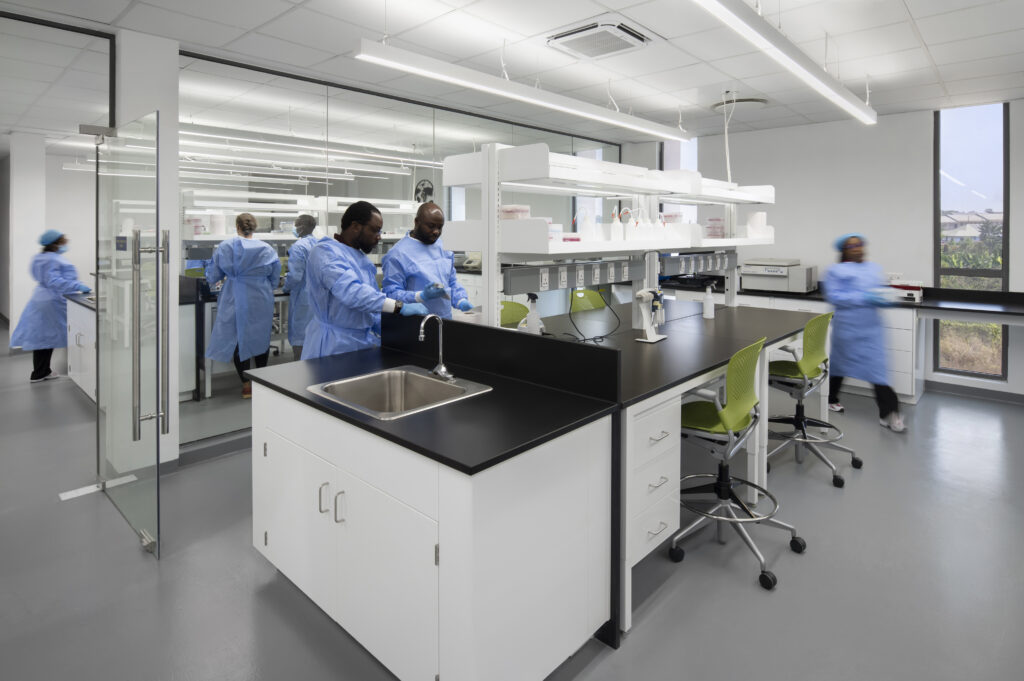
Laboratory Building: The main laboratory building is a state-of-the-art facility, including zoonotic, tissue culture, and VR lab spaces. Each room was carefully designed to accommodate the mechanical and electrical requirements of the high-tech equipment needed, and circulation paths were studied for both opportunities for occupant collaboration and safety concerns.
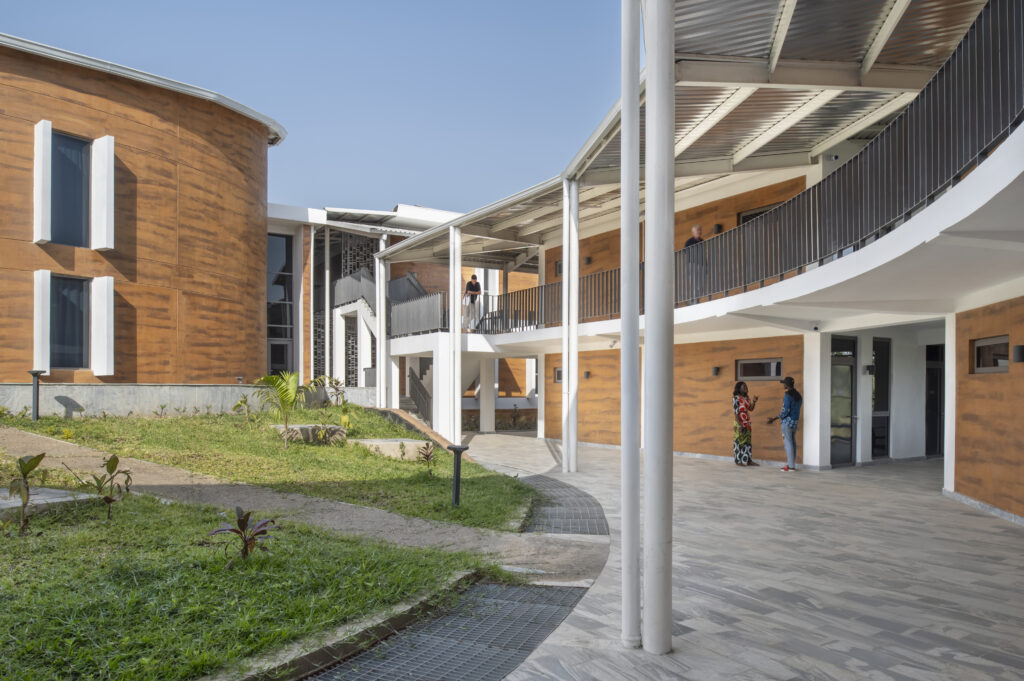
Campus Space: ACEGID’s newly expanded campus facilitates seamless movement between the campus buildings through a series of covered walkways and bridges. The campus design intended to include natural spaces for informal communication in a landscaped courtyard, under a monumental waiting pavilion, or on the benches of a memorial garden.
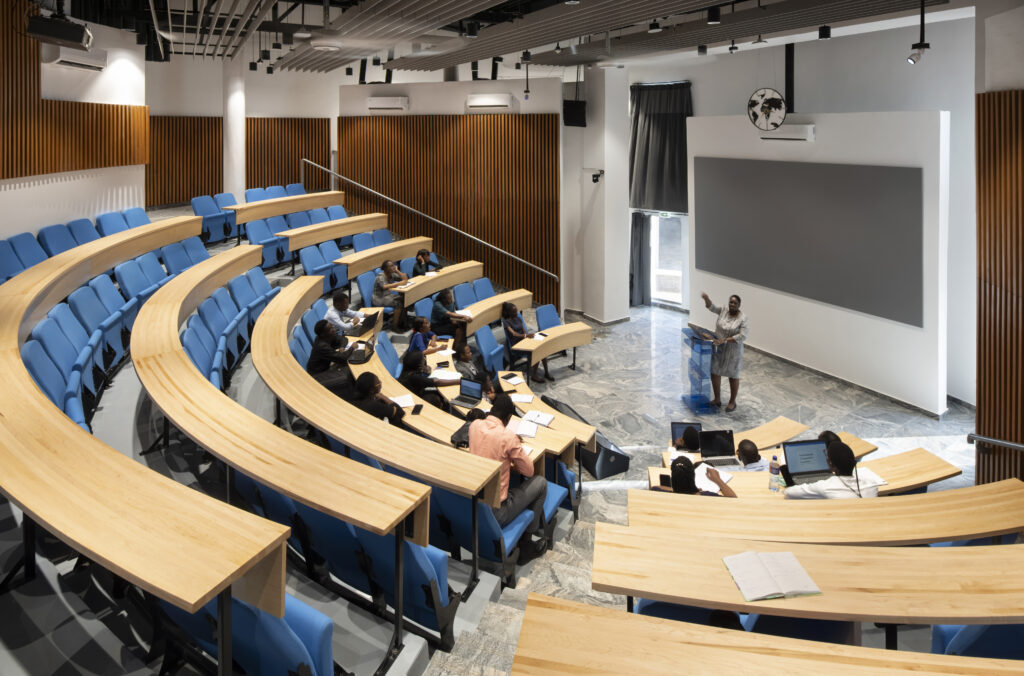
Conference and Training Center: With a 120-seat auditorium, the conference and training center is the focal point of the campus. Intended to host lectures and symposiums, this building will greet guests from all over the world for thoughtful discussions and to share significant research.