
“I think it is important to have access to quality health care because, in our municipality, these opportunities are very scarce. Most of the time, the health system lacks the resources for sufficient care or we often just go without medical care. If there was a hospital in the municipality, it would be of great benefit to the community.” –Edgar Roberto Asig, community leader, Purulhá
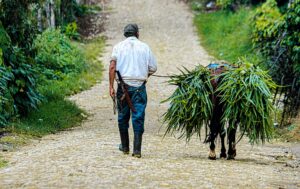
Edgar Roberto Asig lives in Purulhá, a remote community located in Baja Verapaz, Guatemala. He is one of nearly 345,000 people in the region–95% of whom are indigenous Maya–who currently cannot access equitable and comprehensive healthcare services.
Despite having the largest economy in Central America, Guatemala lacks sufficient healthcare infrastructure, services, and personnel to deliver care to up to a third of its people. Under-investment across national, departmental, and municipal healthcare systems, coupled with high poverty rates and low educational attainment, especially– and disproportionately–impact indigenous communities, the very individuals who often need care the most. With shortened life expectancy (up to 13 years less than a non-indigenous person living in the same country) and high maternal mortality, poor health outcomes abound.
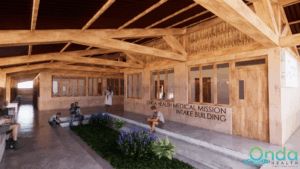
Yet, a solution is in motion. Thanks to the collaboration of two small nonprofits. Onda Health–which delivers adult, pediatric, women’s health, vision and dental services through the support of medical missions–has teamed up with Build Health International to design and construct a new clinical facility that will meet the urgent healthcare needs of Purulhá and surrounding regions, expanding access to essential services. Edgar, his family, and other community members can finally receive fundamental rights to better health.
“In a territory like Purulhá: indigenous, rural, impoverished and systematically excluded, the medical missions are an act of social justice for the restitution of their basic minimum rights,” notes Brenda Lemus, a community leader. Interventions, including the efforts of medical missions, have been hindered due to lack of a working physical facility that can provide surgeries. “The health missions and the construction of a dedicated health facility constitute an act of humanity as part of a community process that seeks to transform by offering dignity.”
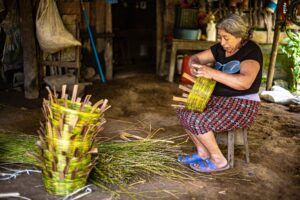
Maria Arias, who has served as a nurse in Purulhá for over 45 years, echoes that call for social justice through infrastructure. She also comments that a hospital also requires proper medical equipment for sustainable operations. “It would be very helpful to have ultrasound, x-rays and surgeries.”
To begin the first phases of design, collecting data and site information proved a critical first step. BHI architectural technician and medical services planner Mikel Beaumont and Betsaida Curto Reyes, a consulting healthcare architect, traveled to Guatemala to conduct research and receive on-the-ground guidance.
“This project was conceived to meet multiple objectives: to provide a healthcare center that meets the highest standards while creating a welcoming and accessible space for local communities,” remarks Betsaida. “We believe this design reflects the needs and aspirations of all involved parties, and we are confident it will set a new standard for sustainability and community care.”
“The first thing we did was interview local architects, because while BHI would support local design, it would be the local architect to bring everything together, [including] the construction licenses, Guatemala’s Ministry of Health approval, and environmental studies,” says Mikel. “Then we met everyone on the [Onda Health] team and started to have a lot of conversations.”
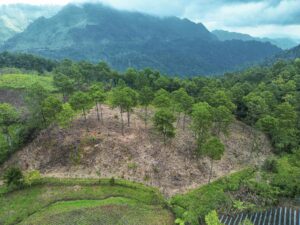
Next, a trip to Purulhá and to assess the proposed project site. Given the complex topography of the terrain, which proved to be a narrow site atop steep inclines, the BHI team utilized drone images to conduct a proper site survey and assessment that would inform and support planning processes.
Following the site assessment, Mikel and Betsaida facilitated several workshops with Onda Health staff to address clinical needs and changes. Technical details around mechanical ventilation and weather conditions that could impact facility operations were also covered.
Programming to enable the anticipated services is robust. The facility will contain intake areas, an outpatient department outfitted with several spaces for pediatric, surgical, optometry, and gynecological consultations, a pharmacy, and imaging and diagnostic testing services including laboratory, x-ray, and ultrasound. A surgical ward enables space for pre- and post-surgery operations, as well as staff support. Future plans to build staff housing for volunteers have also been in the works.
As in any design process, building trust among patients, especially those who have been historically marginalized, excluded, or underserved within healthcare systems, proved valuable in the planning process. Community members all weighed in. “We involved people from the council, teachers, some from the MOH, as well as nurses, and the conversation was about, what do we need? What is going to be good for the medical mission facility? Does it need to look really modern? And if so, will people come?” recalls Mikel.
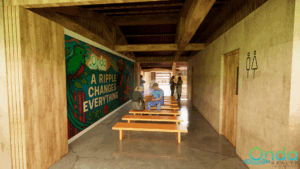
BHI prioritized designing a familiar, welcoming environment, and one that patients would receive positively when seeking care. Incorporating common build materials into the construction, such as bamboo and polished concrete floors, supports accessibility and aligns with other dignified infrastructure that can be found throughout Guatemala. Betty emphasizes the importance of biological preservation and being sensitive to local ecologies. “The design blends seamlessly with the natural environment. The use of sustainable and local materials minimizes environmental impact and reinforces the connection with the landscape.”
To move forward, a local architect in Guatemala will undertake the construction of the facility, including gathering the necessary paperwork and permits. All the same, the ripple of change–and better health for all– is well underway.