
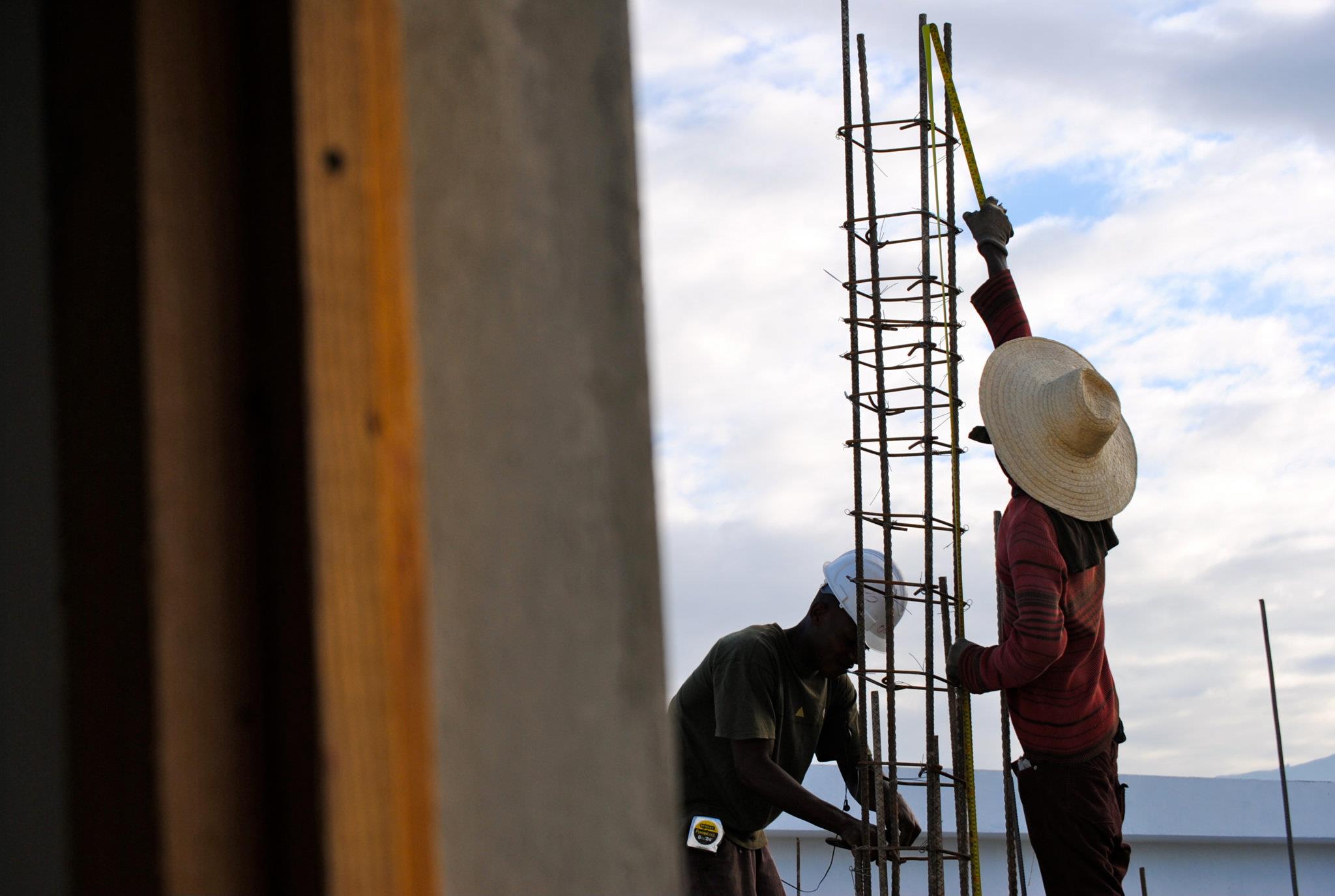
True impact comes not just from what we build, but from the people and teams that sustain it for generations to come
Recently, I had the honor of receiving the 2025 AARP Purpose Prize, awarded annually to a group of leaders ages 50 or older “who tap into the power of life experience to build a better future for us all.” Recognition is always humbling, but it’s also an important moment for reflection, and I’ve found myself thinking a lot about what it really means to “build” for the future.
I’ve spent decades building things. The first 30 years of my career were focused on founding and running Shawmut Design and Construction, which became one of the largest design-build companies in the United States. After I retired from that role, I was connected to Dr. David Walton, Dr. Paul Farmer and the team at Partners In Health, and helped build the Hôpital Universitaire de Mirebalais, a major, 300-bed university teaching hospital in Haiti that opened in the aftermath of the devastating 7.0 magnitude earthquake that struck the country in 2010. Inspired and driven by Dr. Farmer, that experience led David and me to establish Build Health International (BHI), a nonprofit devoted to designing, building, and maintaining dignified, high-quality health infrastructure in resource-constrained communities around the world. Since 2014, BHI has completed more than 200 projects across the Caribbean, Latin America, and Africa.
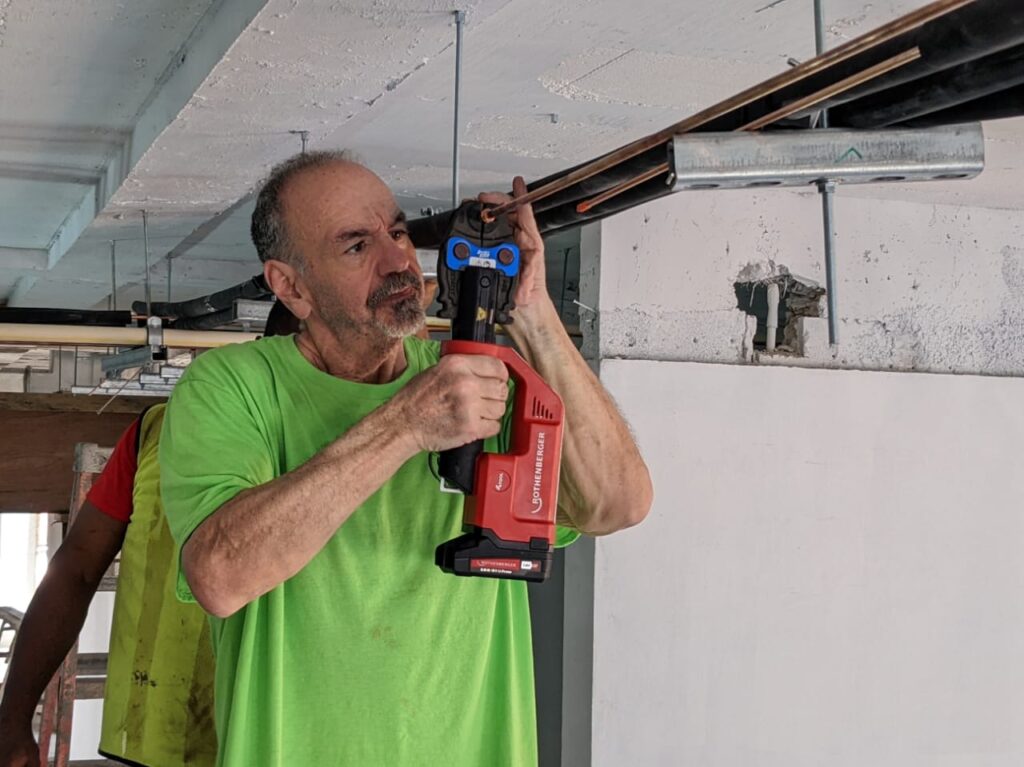
Jim at the site of the Maternal Center of Excellence in Sierra Leone.
That’s a lot of building. Building hospitals. Building solar infrastructure. Building medical oxygen systems. Building laboratories and dental clinics. Rehabilitation centers and triage units. The projects BHI has worked on – in partnership with Ministries of Health, local community leaders, and other mission-aligned nonprofits – enable care for hundreds of thousands of people every day. But maybe the most important thing we’ve built in the past ten years is our global, dynamic team.
Today, the team at BHI numbers more than 130 people, including architects, engineers, project managers, truck drivers, tradespeople, global health professionals, and nonprofit staff. Like me, some of these folks are coming to BHI as a second (or third, or fourth) career. Others are bringing new energy and education as they begin to carve out their career path, working across projects and environments they might not experience in the corporate sector. Many hail from the communities where BHI has worked – a testament to the emphasis we place on training and relying on local workers, who bring fresh perspectives, local expertise, innovative ideas, and a deep passion for health equity. BHI team members are constantly working in some of the most challenging construction environments on earth. They are applying their expertise and collaborating with both local and international partners to overcome challenges ranging from lack of available resources to extreme weather to political unrest.
Too often, I think, the importance of building strong, diverse teams in nonprofits – focused on global health or anything else – is reduced to a conversation about impact; namely, numbers or percentages and metrics that speak to what a team has done, but not who they are. That’s understandable – nonprofits, BHI included, are judged primarily based on their concrete and measurable outputs. But to build something that really lasts requires not only strong materials and the latest technologies, but continuous maintenance and improvement. The same is true of organizations, and it’s why we must be so intentional about creating pathways for new leaders to join, grow, and inspire subsequent generations of team members.
I love this work, and I also know that the ultimate goal – ensuring high-quality medical care for every person around the globe – isn’t a static one, and isn’t likely to be achieved in my lifetime. For every project we complete, there are countless more that still need attention, and there are new challenges emerging every day, from new diseases to a changing climate. We talk often about “sustainability” in our work. In a construction context, that means building projects that are largely self-sufficient and don’t place further burdens on already strained local infrastructure and supply chains. But it also means building an organization and a model that is ready for the long-term, and that will be equipped to carry this critical work forward for multiple generations.
The work of building health infrastructure isn’t just about bricks and mortar, it’s about building hope and resilience. And that starts with people. The people who make up the BHI team. The local partners and workers who are the heart of our projects around the world. The medical staff and patients who day-in and day-out utilize the facilities we build.
When I’m afforded a moment for reflection like that provided by the AARP Purpose Prize – moments that are all too rare in the daily hustle and bustle – and I think about what we’ve built at Build Health International, my mind is drawn not to any individual building or project, but to the passionate, determined, brilliant people who comprise the BHI community. That’s what will last.
About the Author
Jim Ansara is the co-founder and managing director of Build Health International.