
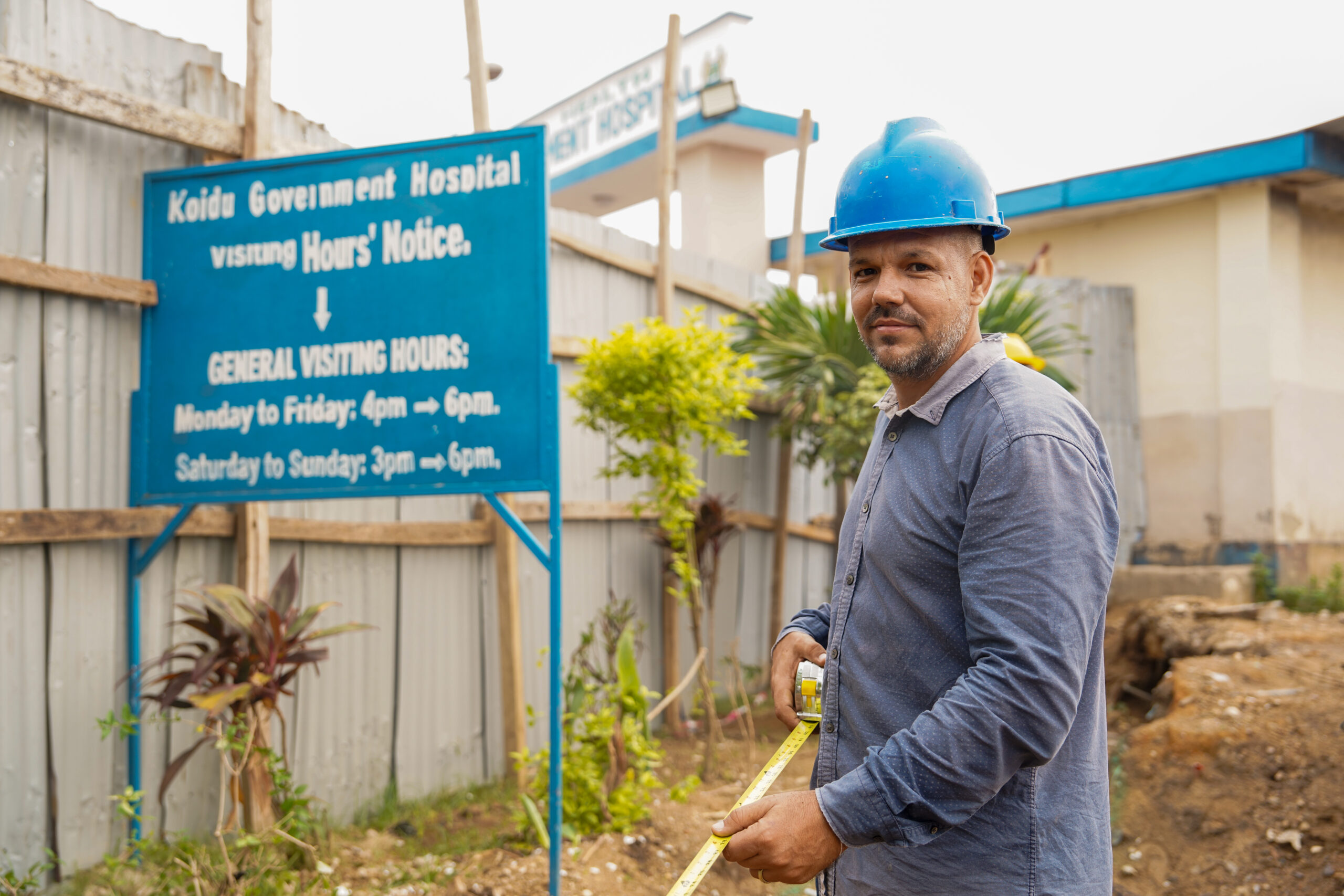
On the busy site of the Koidu Government Hospital in Kono District, Build Health International (BHI) Site Supervisor Rainer Rodriguez Perez stands by the outpatient department, watching a steady flow of women arrive in search of maternal care. They are walking into the Maternal Center of Excellence, a new facility that was officially dedicated in October 2025 to deliver high-quality, dignified maternal and newborn healthcare. A facility Rainer helped build.
For Rainer, watching a mother enter the hospital he has contributed to build for high-quality, dignified care is an “amazing feeling” that justifies the journey from Latin America all the way to West Africa, Sierra Leone.
Rainer is originally from Cuba and later moved to Honduras, where he obtained citizenship in 2018. Before moving to Sierra Leone, Rainer worked on freelance projects and served as a construction supervisor for a convent project in 2021. He joined the BHI team in May 2023, initially serving as an assistant to the previous site supervisor before being promoted to lead the site in 2025.
While Rainer had the required technical skills and knowledge to manage and deliver projects, the resource-constrained environment of Kono demanded a different kind of leadership. Here, over 10,000 kilometers away from home in West Africa, the realities of construction proved quite different. Yet, the purpose remained the same: save lives through infrastructure.
A Transformative Journey
When asked to describe his time in Sierra Leone, Rainer chooses one word: transformative. The experience has pushed him to grow both personally and professionally.
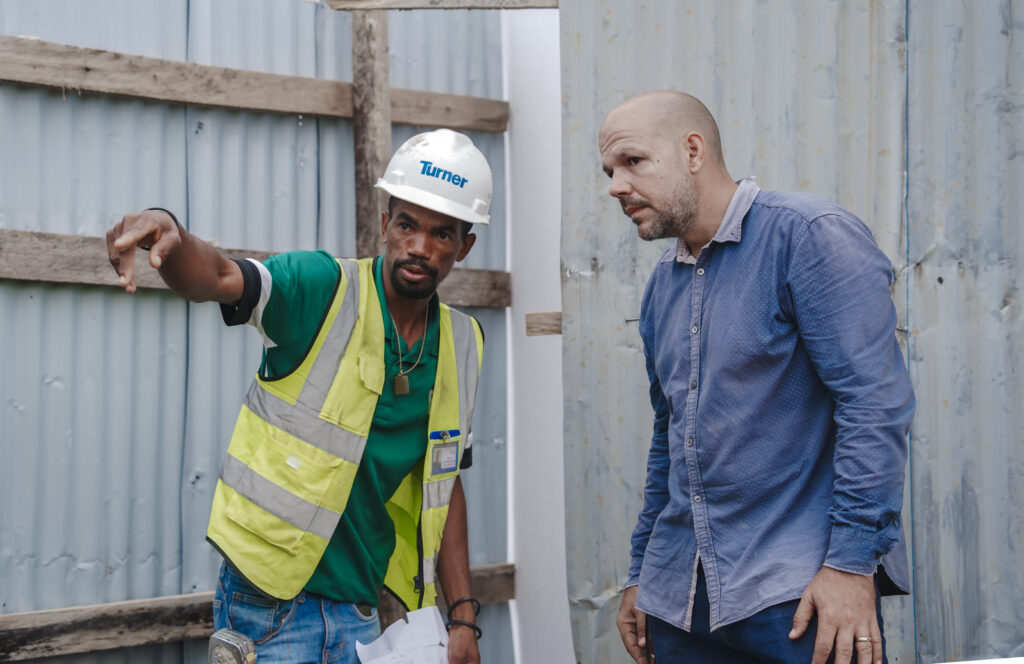
Rainer Rodriguez Perez on site with Plumbing and HVAC Technician Jean Dhonneur Volcy.
“There are many hard aspects on site, but they help me grow, push myself, and keep moving forward,” he reflects.
This is heavily emphasized by Tyler Morris, who managed the project’s construction administration and management and who directly supervises Rainer. “Rainer has grown far out of his comfort zone and established himself as a competent and admired leader. He has taken on a role that necessitates not only leading the ‘big picture’ of construction but also understanding and teaching the smallest details.”
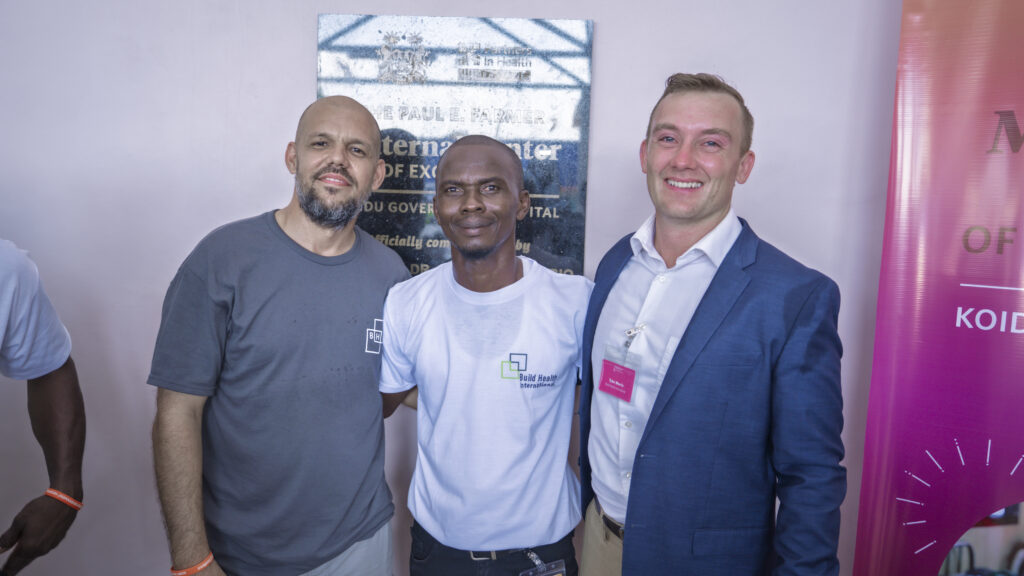
Rainer with with Mani Kugbana, an electrical foreman, and Tyler Morris, project manager.
Beyond the mental hurdles, the physical demand is constant. Each day, Rainer clocks nearly 20,000 steps to ensure every design detail meets BHI’s rigorous standards. The logistical constraints found in building in resource-constrained settings, coupled with cultural differences, tend to make the work even more complex.
For Rainer, these challenges are the foundation for BHI’s most critical work: workforce capacity building. He describes one of the most inspiring days in Sierra Leone, one that began with a mechanical failure and concluded with song and dance:
“The equipment broke down during a major pour. We had to carry 120 cubic meters of concrete by hand until 11:00 p.m. in the rain,” he recalls. “And yet, [team members] were still dancing. That experience changed me as a person.”
This professional dedication is matched by a deep personal sacrifice. As a father he feels the distance most. During his 12:00 p.m. lunch break, he uses it daily to connect with his family back home. It is a ritual that fuels his purpose.
Defining Dignity
As a core pillar of BHI’s mission, local capacity building ensures a legacy of skill building. Rainer embodies this belief. He has spent countless hours training the local Sierra Leonean workforce to interpret complex architectural drawings, as well as practice and refine precise construction skills.
“Many of them had natural abilities and great potential,” Rainer says. “I helped them develop those skills and apply them more professionally.”
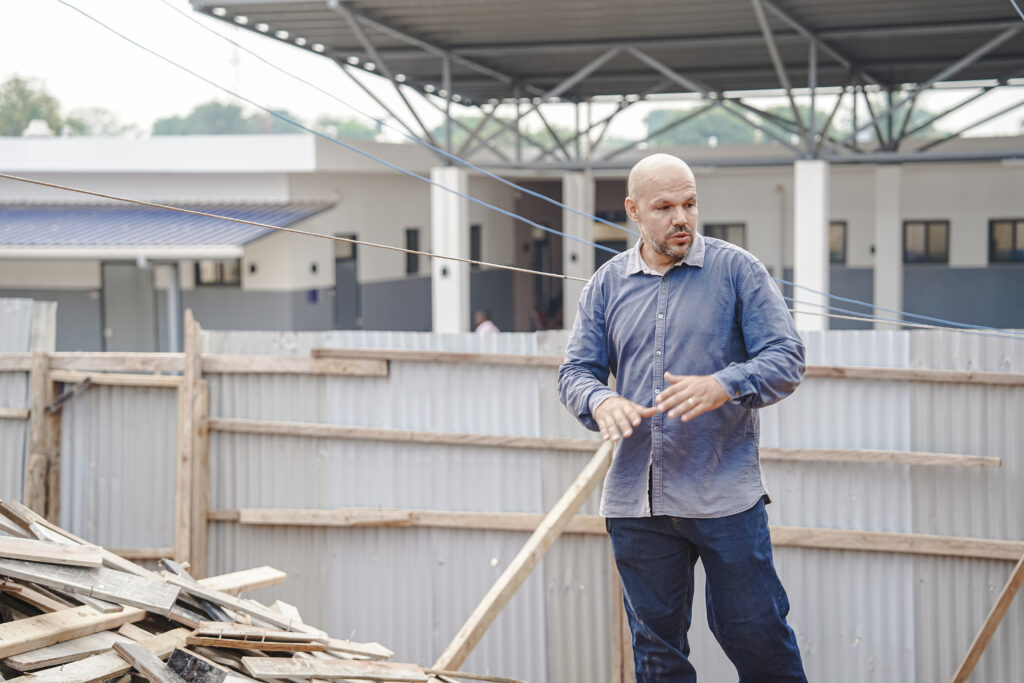
For Rainer, and for BHI, the construction of this new facility is more than a facility. It is a testament to what is possible when global expertise meets local determination. By investing in the people who lay the blocks, erect fences, and construct roofs, BHI is ensuring that the foundation for global health equity remains strong for generations to come.
The local team quickly noticed Rainer’s technical knowledge and began to look to him as a teacher. He has designed and dedicated a garden on the MCOE campus to the construction workforce. Because for Rainer, the true definition of dignity is when a local mason who will one day walk past these walls with his granddaughter and say, “I helped build this.” In that moment, the foundation of global health equity isn’t just strong—it’s permanent.