
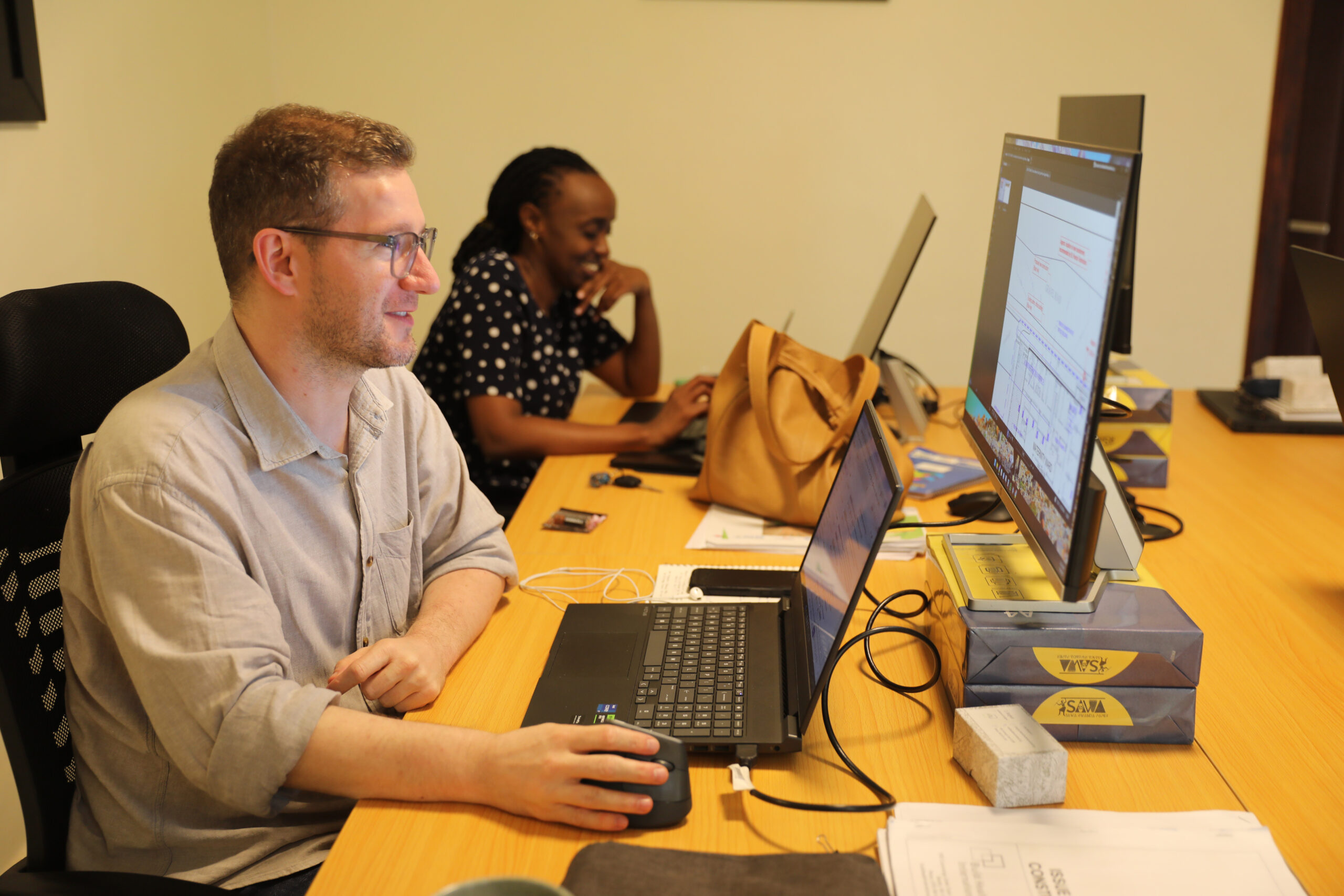
Over the past year, a thoughtful collaboration between Build Health International (BHI), the Rwandan Ministry of Health (MOH), and the Rwanda Biomedical Centre (RBC) has culminated in the development of national healthcare infrastructure design guidelines. Designed by BHI, the standards, once implemented, will set the precedent for healthcare infrastructure throughout Rwanda and beyond.
Underlying Critical Needs
Rwanda is re-evaluating how it designs and delivers healthcare based on several key goals. First, to address urgent health-related challenges, including infectious disease outbreak, as well as high maternal and neonatal mortality; vector-borne diseases such as COVID-19, Mpox, and Marburg virus have emerged as serious concerns in the past decade. Secondly, to become exemplary leaders in healthcare specialization throughout East Africa, with institutions such as IRCAD in Kigali housing state of the art medical technologies.
Recognizing the need for streamlined and effective, as well as consistent, healthcare infrastructure, Rwanda’s Ministry of Health (MOH) and the Rwanda Biomedical Centre (RBC) approached BHI for support to create comprehensive, actionable guidelines that could standardize healthcare facility design across the country. Backed by the Skoll Foundation and the Wagner Foundation, these guidelines set forth the standard on how infrastructure–from surgical facilities spaces to maternity wards–can be optimized to deliver high-quality care.
The Bottom-Up Approach
Rather than attempt a one-size-fits-all approach, BHI’s team of architecture, engineering, and facilities maintenance experts (including mechanical, electrical, and plumbing) embraced a bottom-up methodology, beginning first with individual hospital departments and functional units. According to BHI architect Alberto Cumerlato, creating healthcare guidelines that integrate globally recognized design best practices into a unique set of standards that are applicable to Rwanda. “We started from the smallest details—and now we’re working backward to build the bigger picture.”
Furthermore, addressing the project in various stages has been instrumental to implementation efforts. Phase one has centered on maternity and neonatal units, two of the country’s most critical and frequently used services, which align with the Rwandan MOH’s strategic goals outlined in Vision 2050.
Phase two will take on surgical units, with plans to develop decontamination and sterile services.
“When faced with a big challenge, the key is to break it into manageable parts easier to understand and solve,” says Alberto. “That’s exactly the approach we took—tackling one functional program unit at a time and then bringing the pieces together to build a comprehensive solution.”
Each part of the guideline is linked: a written document (the core guidance), detailed room layout sheets, and a functional program area outlining how every room supports patient care. This approach allows for incremental progress and ensures that each component of a healthcare facility is rigorously designed with local context in mind. It also makes the guidelines more accessible for the professionals who will ultimately use them.
Designing for Sustainability and Equity
A key goal of the project is integration—creating unified design expectations for all healthcare facilities, regardless of who builds them. With these new guidelines, Rwanda can take a strategic approach toward its healthcare vision. As an additional benefit, the new standards tackle long-term maintenance and operations. Standardizing medical equipment, for instance, will simplify procurement and reduce downtime due to mismatched parts. Over time, this action will significantly lower costs while improving patient outcomes.
Building Local Capacity
Although led by international experts, the new guidelines deliberately prioritized training and knowledge transfer. BHI worked closely with Rwandan healthcare sector experts throughout the process, and there are emerging plans to develop a training component that would empower RBC and MOH staff to take full ownership of implementation.
These guidelines will not simply sit on a shelf—they will be used by local designers, enforced by government regulators, and updated regularly based on frontline feedback.
Looking Ahead in Rwanda
This initiative is more than a design exercise—it is a strategic investment in Rwanda’s health sovereignty. By building a system that prioritizes functionality, context, and sustainability, Rwanda is positioning itself as a leader in innovative, locally owned health infrastructure development. Moreover, the project lays the foundation for stronger public health responses to future crises, including infectious disease outbreaks. Infection-ready infrastructure that is designed according to these guidelines can address problems head on.
Looking ahead, Rwanda’s health system will utilize a national blueprint for equitable, resilient, and future-ready healthcare that incorporates context-sensitive design—grounded in local leadership and collaboration.
“Hopefully, this is just the beginning,” Alberto says.